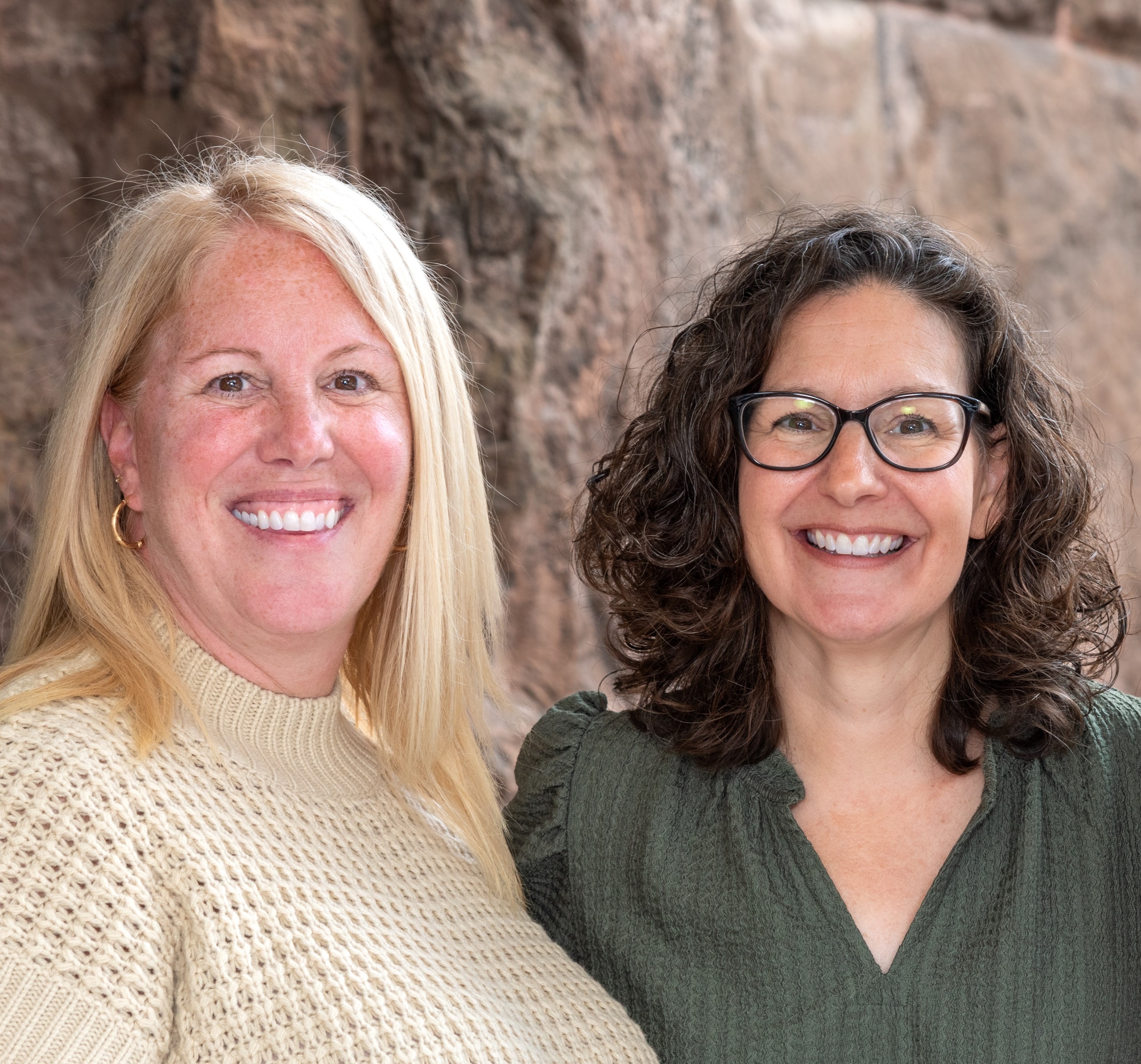
Early Childhood Insights with Kim Barrett & Kristin Black
Kingsley’s Early Childhood leadership team reflects on technology use, coding, AI, and more!
Is technology “Montessori?”
KIM: I don’t think of technology as “Montessori” or “not Montessori.” Maria Montessori was a scientist who observed children closely. Her approach was grounded in curiosity, experimentation, and a deep respect for how children learn best. From that perspective, technology can align with Montessori principles when it’s used thoughtfully—as a tool for exploration, creativity, and discovery—rather than for passive consumption. Additionally, since technology is often a part of an adult’s daily work, becoming oriented to digital life does have some “Practical Life” merit. Our goal is to raise children prepared and empowered for the work of adulthood, from buttering toast to delivering a research presentation.
How do you feel about Early Childhood students using technology?
KIM: There are a few things at play here. From a parent’s perspective, I completely understand how technology can be a useful tool to ease stressful parenting moments—flights, long drives, or a busy day. Parenting is full, and sometimes screen time can offer a much-needed break. We also know that, when used thoughtfully, technology can be part of a balanced and healthy childhood.
The Mayo Clinic and the American Academy of Pediatrics recommend zero screen time for children under two, and a maximum of one hour a day between the ages of 2 and 5 (Source). If you are offering more than that in your current routine, those might be helpful targets to aim for.
I often share with families that it’s so much easier to set a family standard in the Early Childhood years and carry it forward than it is to “put the genie back in the bottle” later on. When you set gentle, consistent boundaries around technology now, you’re really strengthening the parenting muscles you’ll rely on as your child grows, through elementary, middle, and even high school. Early Childhood is such a wonderful time to build those healthy habits and a strong foundation that will serve your family for years to come.
Now, let’s talk about types of technology use. Families often ask me if math or language games on an iPad are helpful for learning, and I do think there is a place for that. And, I would encourage families to provide a variety of non-screen math and language games for your child to explore. Kingsley teachers and our school learning specialists are great resources if you are looking for recommendations.
Additionally, any time you talk with your child about what you’ve watched together, such as after a family movie night, you’re supporting many areas of development: narrative skills, recall, and social-emotional growth. When technology becomes a spark for family connection and conversation, it can be incredibly positive. In short, both the quantity and the quality of screen time matter.
Do teachers and students ever use technology at Kingsley, and if so, when?
KRISTIN: At Kingsley, where hands-on, physical learning is at the heart of the Montessori method, technology is thoughtfully used to support—not replace—our approach. For example, I observed a science lesson on volcanoes where students explored the topic in several engaging, tactile ways: identifying the parts of a volcano, completing puzzles, and creating their own books to show the steps of an eruption. To enrich this experience, a teacher shared a personal family video of a volcanic eruption in Hawaii, giving students a real-world glimpse of smoke, ash, and lava. In this instance, technology provided a meaningful and personalized connection to the lesson, enhancing curiosity while staying true to Montessori principles.
It is also not uncommon for students to listen to audiobooks on a Yoto player in their classroom. This can be a nice way for a child to calm their body and take a break from the sounds of the classroom. Additionally, some classrooms use movement videos to guide the whole class through a fun sequence of jumping, dancing, and stretching—getting the wiggles out so that students can focus. If you have specific questions about the technology present in your child’s classroom, I encourage you to reach out to their teachers.
In the Elementary years, Kingsley thoughtfully introduces children to the ways that technology can enhance their learning. Beginning in Third Grade, students learn to type, have lessons on digital safety and responsibility, and conduct research for papers and projects. We know that most Kingsley students attend non-Montessori middle schools, and our program is intentionally designed to prepare students to thrive in those environments. In fact, we believe that lower technology use in the earlier grades leads to more effective—not to mention more responsible—technology use in adolescence. More on that below! For more information about technology in the Elementary grades, I encourage you to attend the Tech Talk event on Tuesday, January 13.
Will my child be behind if they don’t learn to navigate a tablet at a young age?
KIM: Not at all. Young children learn best through hands-on, real-world experiences that engage all of their senses. They are building foundational skills like focus, coordination, problem-solving, creativity, and social awareness. Later in life, those skills underpin thoughtful and responsible technology use.
Learning to navigate a tablet is a mechanical task that can be picked up quickly. What takes time and careful cultivation is the ability to think critically, persevere through challenges, and collaborate with others. Every day at Kingsley, our students are finding their voice, developing careful judgment, and learning to trust themselves to solve problems big and small.
There’s a lot of discussion right now about AI and its impact on students. I am not at all concerned about our Montessori students, as they get older, navigating emerging technologies. When they graduate from Kingsley, these incredible young people will continue to work hard, follow their passions, and advocate for others.
Should I sign my children up for tech camps or coding academies?
KRISTIN: It depends on your child’s interests and developmental stage. The priority is nurturing curiosity, problem-solving, and perseverance—the qualities that make great thinkers and innovators in any field, including technology. If your child enjoys building, designing, or solving puzzles, a tech or coding camp can be a wonderful extension of those interests. What matters most is that the experience promotes creativity and active learning rather than excessive screen time.
KIM: Another important piece to consider is the class or activity’s impact on sleep. Research shows that screen time, especially close to bedtime, can make it harder for children to wind down and fall asleep (Source). Creating calm, screen-free routines in the evening helps children get the sleep they need for healthy development, focus, and emotional regulation. This is important for us to remember for ourselves, too!
BOTH: Thank you for reading, and please reach out to either of us with questions. We are always here to support you!
MEET THE WRITERS:
Kim Barrett is Kingsley's Director of Early Childhood. She has a Master’s in Early Childhood Education from Lesley University and over 20 years of experience in early childhood education and nonprofit leadership. She has an exceptional knowledge of early childhood development, strong supervisory skills to support the growth of teachers, and a successful history of fostering a positive school culture.
Kristin Black is Kingsley's Assistant Director of Early Childhood Education. She holds multiple degrees in Special Education and Elementary Education with a focus on reading. She has over 20 years of experience in early childhood through middle school education, specializing in social-emotional learning and family engagement. She has worked in both independent and public schools, and is passionate about building strong partnerships and creating nurturing, enriching environments where children thrive.
.jpg&command_2=resize&height_2=85 "The Kingsley Entry Program: KEP 1 & KEP 2")

.jpg&command_2=resize&height_2=85 "Paying It Forward as an Admissions Volunteer")


.jpg&command_2=resize&height_2=85 "Supporting Your Child's Creativity")






.jpg&command_2=resize&height_2=85 "Qs with the HoS: June 2025")